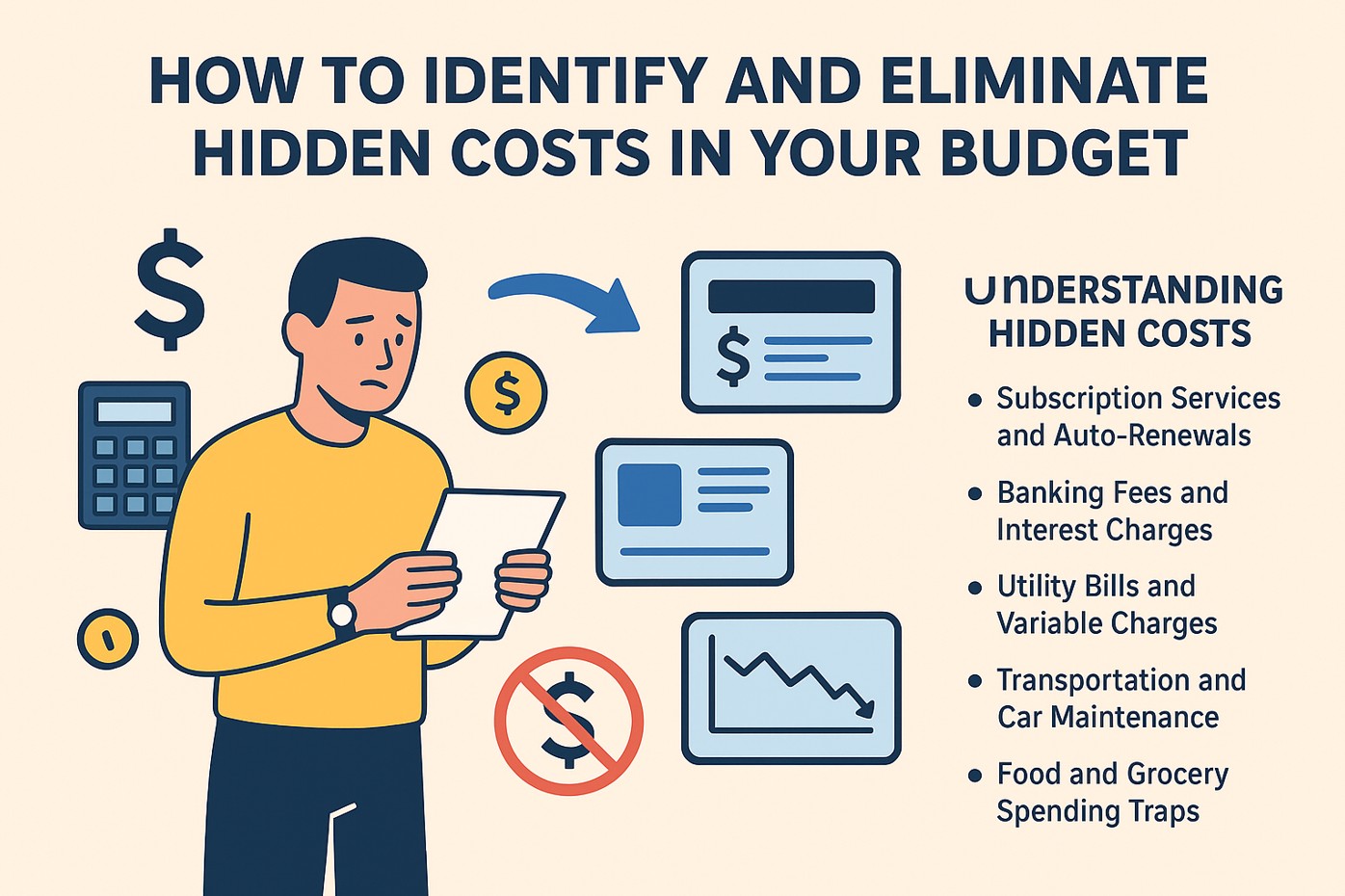
Ever wondered where your money disappears every month — even when you swear you’re being careful? Hidden costs are the silent budget killers that can quietly drain your finances without you noticing. From sneaky subscription renewals to banking fees, these costs add up fast.
In this guide, we’ll walk through how to identify, understand, and eliminate those hidden expenses to help you save smarter and regain control over your finances.
Understanding Hidden Costs
What Are Hidden Costs?
Hidden costs are expenses that aren’t obvious at first glance — the ones that slip through unnoticed because they’re small, irregular, or automatically deducted. They can range from monthly app renewals to fees buried in your bank statements.
Think of them like small leaks in a water pipe — one drip doesn’t seem like much, but over time, it can flood your finances.
Why They Sneak Into Your Budget
Hidden costs creep in for a few reasons:
-
You sign up for free trials that auto-renew.
-
You ignore small monthly charges because they “don’t matter.”
-
Companies hide fees deep in fine print.
-
Price increases happen without notification.
These costs thrive on inattention and convenience, which is exactly what we’ll tackle next.
Common Hidden Costs You Might Overlook
Subscription Services and Auto-Renewals
Netflix, Spotify, Amazon Prime, Adobe Creative Cloud — the list goes on. Many people pay for multiple subscriptions they no longer use.
Tip: Go through your email or banking app for “renewal” or “subscription” keywords and cancel what you don’t use.
Banking Fees and Interest Charges
Banks love to add “maintenance” or “minimum balance” fees. Late payment and overdraft fees are even worse.
Action step: Ask your bank to waive unnecessary charges, or consider switching to fee-free accounts like those from Revolut or Chime.
Utility Bills and Variable Charges
Electricity and internet bills can spike due to usage surcharges or seasonal pricing.
Pro tip: Use a smart meter or budgeting tool like Mint to track trends.
Transportation and Car Maintenance
Gas, tolls, parking, and surprise maintenance costs add up fast.
Solution: Use apps like GasBuddy to find cheaper fuel and set aside a monthly “car fund” for maintenance.
Food and Grocery Spending Traps
Those “quick snacks” and food delivery fees can be silent killers.
Quick fix: Plan your meals and use grocery cashback apps like Ibotta.
How Hidden Costs Impact Your Finances
The Domino Effect on Savings and Investments
Every unnoticed dollar spent on hidden costs is a dollar not invested or saved. Over a year, even $50 a month in untracked expenses equals $600 lost — money that could’ve grown through compounding interest.
How It Affects Financial Goals
Hidden costs delay your goals — whether it’s buying a home, building an emergency fund, or traveling. They drain motivation and make budgeting feel pointless.
How to Identify Hidden Costs in Your Budget
Step 1: Track Every Expense for a Month
Write down every single transaction, even small ones like coffee or parking. Apps like YNAB (You Need a Budget) make it easy to track automatically.
Step 2: Review Recurring Payments
Go through your PayPal, Google Play, or Apple subscriptions. You might be surprised by old subscriptions quietly draining your card.
Step 3: Analyze Your Bank Statements
Hidden fees often hide under vague descriptions like “service charge” or “convenience fee.”
If you can’t identify a charge, call your bank for details.
Step 4: Use Budgeting Apps and Tools
Tools like PocketGuard and GoodBudget flag recurring or unexpected expenses automatically. They help you see patterns you’d normally miss.
Strategies to Eliminate Hidden Costs
Cancel or Consolidate Subscriptions
If you haven’t used a subscription in 30 days, it’s time to cancel.
Bundle wisely — for example, some mobile carriers offer Netflix or Disney+ as part of a package.
Negotiate Bills and Fees
You can often negotiate your internet, insurance, or credit card fees just by asking.
Companies would rather keep you than lose you, so don’t be afraid to say:
“I’ve been a loyal customer for a while. Can you offer me a better rate?”
Switch to Cost-Effective Alternatives
Swap premium services for free or cheaper ones:
-
Replace cable with YouTube TV or Pluto TV.
-
Switch from expensive gym memberships to home workouts on YouTube.
-
Move to open-source tools instead of costly software.
Set Up Alerts and Spending Limits
Most banking apps let you create spending alerts. Set them for categories like dining, shopping, or streaming. It’s like having a personal finance watchdog.
How to Maintain a Transparent Budget
Create a Monthly Budget Review Routine
Set a calendar reminder to review your budget every month. Treat it like a financial health check.
Ask yourself: “Where did I overspend?” and “Which charges surprised me?”
Automate Smartly — Not Blindly
Automation helps, but don’t set and forget. Regularly review your automated transfers and recurring payments.
Reevaluate Your Priorities Regularly
Your needs change over time. Maybe that extra streaming service isn’t worth it anymore. Regularly adjusting your budget ensures your money goes where it truly matters.
Expert Tips for Long-Term Savings
Use Cashback and Reward Programs
If you’re spending anyway, make your money work for you. Use cashback credit cards or apps like Rakuten to get money back on purchases.
Invest in Financial Education
Learning how money works gives you power. Follow trusted educators like Dave Ramsey or watch free YouTube channels like The Financial Diet.
Build an Emergency Fund
Having 3–6 months of savings prevents panic when unexpected costs hit. It also reduces reliance on credit cards or loans — which often come with hidden interest fees.
Real-Life Example: The “$50 Leak” Challenge
Here’s a fun way to test your awareness. For one month, try to find $50 worth of hidden or wasteful spending — unused subscriptions, late fees, impulse buys, etc.
You’ll be shocked how easy it is to hit that number in just a week. Once you identify the leaks, redirect that money into a savings or investment account. Over a year, that’s $600+ saved without earning a cent more.
Conclusion
Hidden costs are like termites — they silently eat away at your financial foundation. But once you know where to look, spotting and eliminating them becomes second nature.
Take charge of your budget today. Start by tracking, trimming, and tweaking your spending habits. Over time, you’ll not only save more but also feel more in control of your money.
FAQs
1. What’s the easiest way to spot hidden costs?
Start by reviewing your bank and credit card statements from the last three months. Look for recurring or small unfamiliar charges — those are usually the culprits.
2. How often should I review my budget for hidden costs?
Ideally, once a month. But a quarterly deep dive is also great if you’re consistent with your spending habits.
3. Are budgeting apps safe to use?
Yes — as long as you choose reputable ones like YNAB, Mint, or PocketGuard that use bank-level encryption and secure data policies.
4. How much can I realistically save by removing hidden costs?
Most people save $500–$1,500 a year after cutting unnecessary subscriptions, fees, and impulse purchases.
5. Can I automate the process of finding hidden costs?
Yes! Truebill (now Rocket Money) automatically detect and cancel unused subscriptions — making it easier to plug leaks in your budget.
Word Count: 1177
